From the blog
What a 1,200 mg Proprietary Blend Tells You, Using the SodaPeak Label
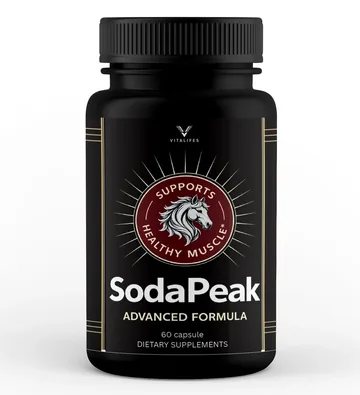
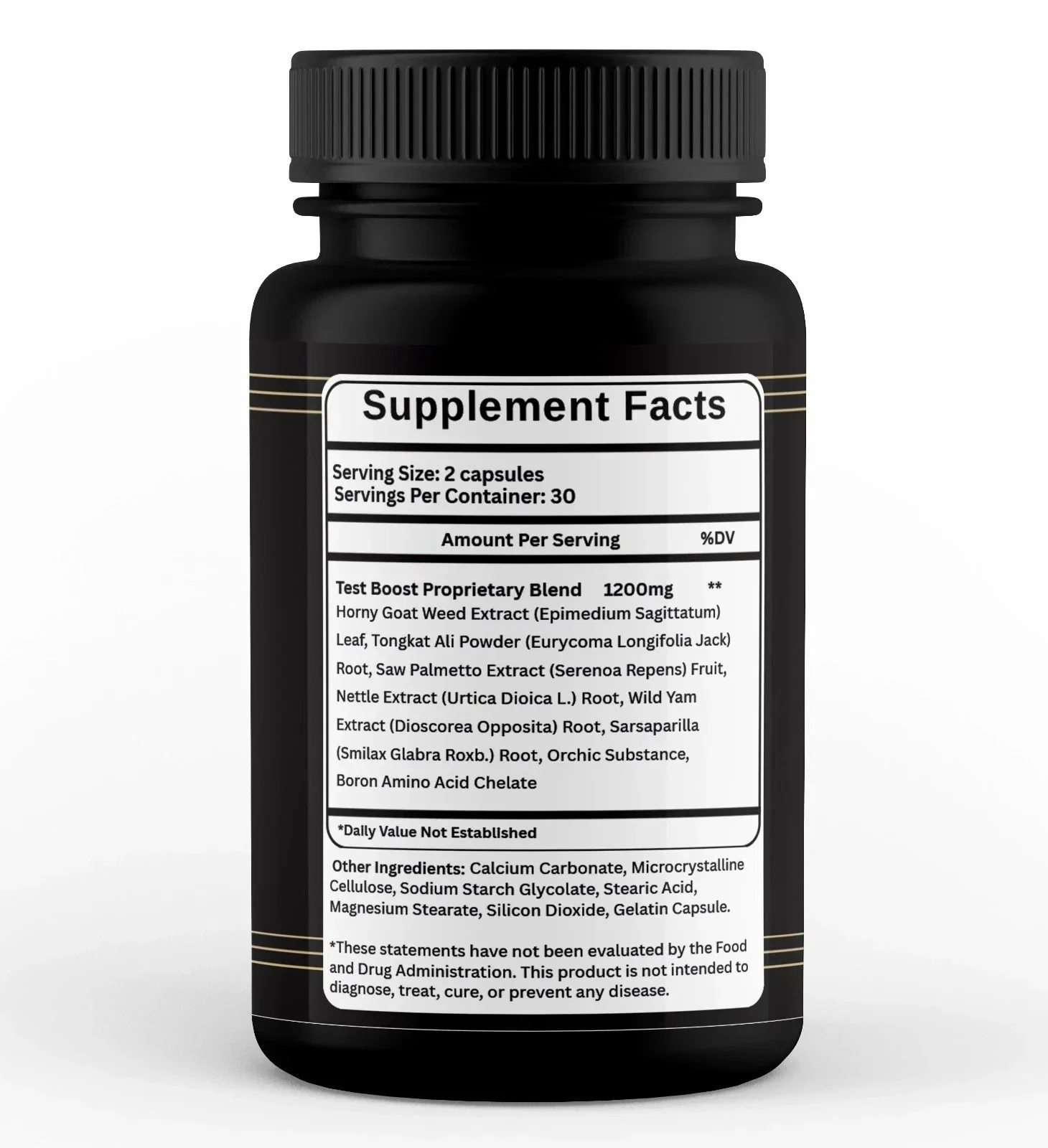
A proprietary blend gives one total weight for several ingredients without saying how much of each is inside. SodaPeak’s Test Boost Proprietary Blend is 1,200 mg per two capsules across eight ingredients. Split evenly that is about 150 mg each, but the real split is not published. US label rules only require that blend ingredients be listed from most to least by weight.
What “proprietary blend” means
Every page, every journal post, the bottle facts and the ingredients go through review by Dr. Janyna Mercado before they ship. On a Supplement Facts panel, most ingredients get their own line and their own amount. A proprietary blend is different. It gives one name, one total weight, and then a list of what is inside, without saying how much of each.
Blends are legal in the United States. Makers usually explain them as protecting a recipe from copycats. For a buyer, though, they create a practical problem: you cannot compare any single ingredient with the amount used in research, and you cannot compare two products on price per milligram.
That is the trade-off. A blend protects the maker and costs the buyer information.
The SodaPeak blend, line by line
The SodaPeak label shows a serving of 2 capsules and 30 servings per bottle. Under the heading is one line: “Test Boost Proprietary Blend 1200mg,” with two asterisks meaning no Daily Value is established.
Eight ingredients follow in this order.
| Order | Ingredient | Latin name and part |
|---|---|---|
| 1 | Horny goat weed extract | Epimedium sagittatum, leaf |
| 2 | Tongkat ali powder | Eurycoma longifolia Jack, root |
| 3 | Saw palmetto extract | Serenoa repens, fruit |
| 4 | Nettle extract | Urtica dioica L., root |
| 5 | Wild yam extract | Dioscorea opposita, root |
| 6 | Sarsaparilla | Smilax glabra Roxb., root |
| 7 | Orchic substance | Bovine testicle tissue |
| 8 | Boron amino acid chelate | Boron bound to amino acids |
The order is not decoration. US rules require blend ingredients to be listed from most to least by weight. So horny goat weed is the largest share, and boron amino acid chelate the smallest. That is the only quantitative fact the label gives you beyond the total.
The math: what 1,200 mg could mean
1,200 mg is 1.2 grams, which is a respectable total for a capsule product. Two capsules of 600 mg each is a normal size.
Split evenly across eight ingredients, each would be 150 mg. That is only an illustration. A top-heavy split, which is more common in practice, might give 600 mg to the first ingredient and leave the last three at a few milligrams each.
| Scenario | First ingredient | Last ingredient |
|---|---|---|
| Even split | About 150 mg | About 150 mg |
| Top-heavy (example) | 500–700 mg | A few mg |
| Actual | Not published | Not published |
Why the amount matters
Herbal research tests a specific extract at a specific daily dose. Saw palmetto trials for prostate symptoms generally use about 320 mg a day of a fat-soluble extract (National Center for Complementary and Integrative Health, “Saw Palmetto: Usefulness and Safety”). Tongkat ali studies usually use 200–400 mg a day of a standardized extract (NIH Office of Dietary Supplements, “Dietary Supplements for Exercise and Athletic Performance”). Nettle root has been tested for prostate symptoms over six months of daily use (National Center for Complementary and Integrative Health, “Benign Prostatic Hyperplasia and Complementary and Integrative Approaches”).
If the even split were true, SodaPeak would fall short of all three. If the split is top-heavy, one ingredient might reach a studied amount while the rest are token. Without the numbers, nobody outside the factory can say which.
Standardization: the second number to look for
Amount is only half the story. Herbal extracts are also described by strength: “standardized to 20% icariin,” or “45% fatty acids.” Two products with the same milligram figure can differ several-fold in active compounds.
The SodaPeak panel states no standardization for any of its herbs. It names “extract” for most and “powder” for tongkat ali, which usually means a weaker, unconcentrated material.
What the blend name implies, and what the label claims
The blend is called “Test Boost Proprietary Blend.” That name does a lot of marketing work: it suggests testosterone without making a claim the label has to support.
The bottle’s own claim is narrower: “Supports healthy muscle,” with an asterisk pointing at the FDA disclaimer. Structure-function claims like that are allowed without FDA approval, as the FDA explains in its consumer guide to supplements (U.S. Food and Drug Administration, “Dietary Supplements”).
So the blend name sets an expectation the label never actually promises. That gap is worth noticing on any product.
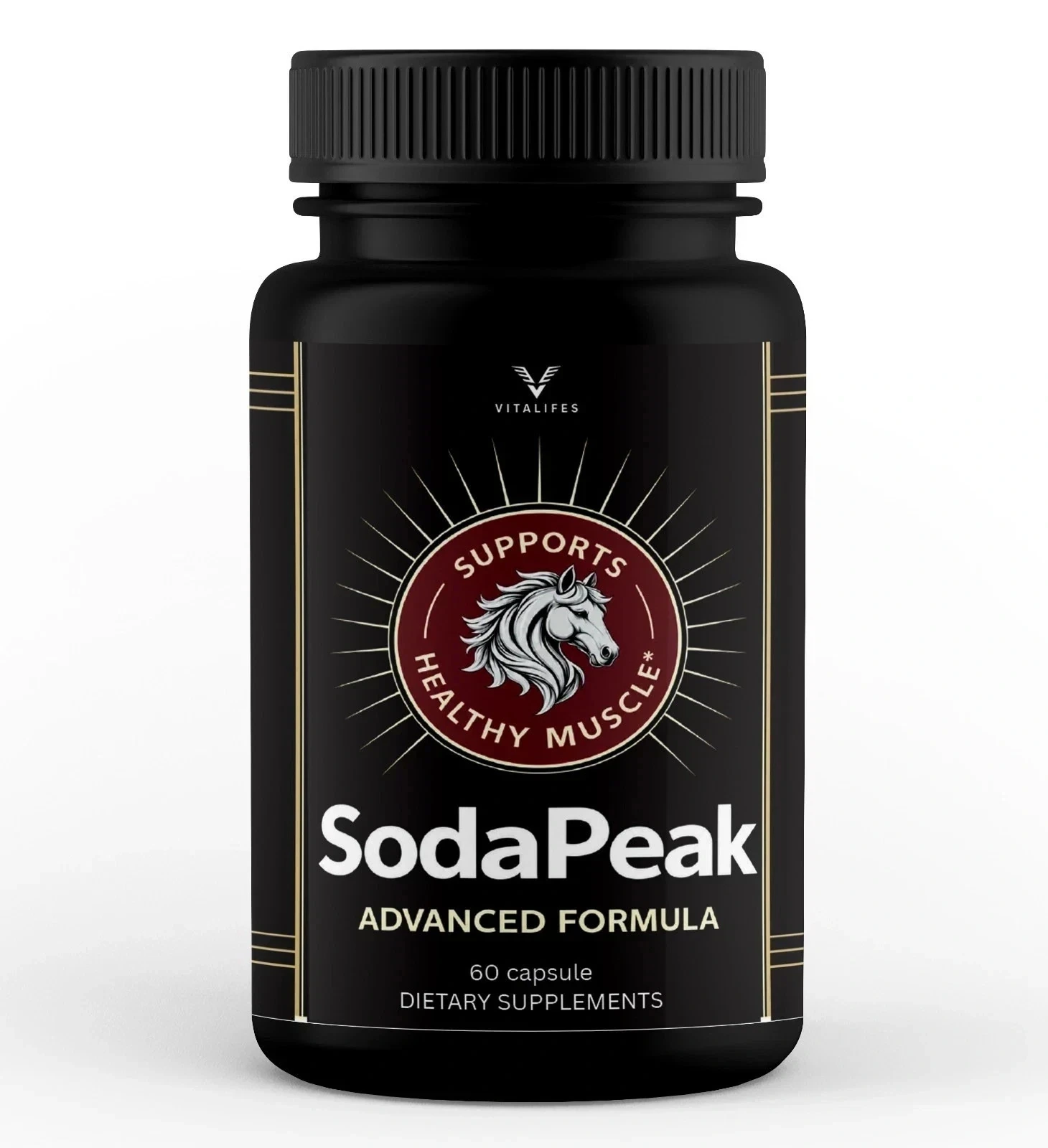
See the full SodaPeak label and packs.
Check today’s priceQuestions worth asking the seller
- How many milligrams of each ingredient are in one serving?
- Are any of the extracts standardized, and to what?
- What is the extract ratio for the herbs (4:1, 10:1)?
- Is there a certificate of analysis for this lot?
- Is the orchic substance sourced and tested, and where?
Call the order desk and ask before you buy a multi-bottle pack. A seller who can answer is worth more than a seal.
How a more open label would look
A transparent version of this panel would give each ingredient its own line: “Saw palmetto extract (fruit) 320 mg, Nettle root extract 200 mg,” and so on, adding up to 1200 mg. It would also state standardization where it matters.
Those numbers are a format example, not SodaPeak’s real split. If the seller ever publishes the actual amounts, we will add them here and date the change.
How this compares with other men’s labels
Blends are the norm rather than the exception in this category. Walk through any men’s aisle and you will see “performance matrix,” “vitality complex,” “test support blend,” each with one number and a list.
A minority of brands print every amount. They tend to be the ones selling a single well-studied ingredient, such as creatine monohydrate or a standardized saw palmetto extract, where the number is the selling point rather than something to hide.
So the question to ask is not whether a blend is allowed, but why this particular maker chose one. If the amounts were impressive, printing them would sell more bottles.
A quick way to compare two blends
Add the totals
Blend A at 1,200 mg and blend B at 800 mg are not comparable until you look at what is inside.
Count the ingredients
Eight ingredients in 1,200 mg averages 150 mg. Four ingredients in 800 mg averages 200 mg.
Check the first name
The first ingredient is the largest share, so it tells you what the product is really built around.
Look for standardization
A standardized extract at a smaller weight can carry more active compound than a large weight of plain powder.
Ask both sellers
The one who answers with numbers is the one worth buying from.
The bottom line
A 1200 mg proprietary blend tells you the total weight and the order of eight ingredients, and nothing about how much of each you take. That is legal, common, and the main reason our expectations for SodaPeak are modest.
Read the panel, ask for amounts, and judge any supplement by your own notes over a few weeks rather than by the name of its blend.
Sources
- National Center for Complementary and Integrative Health. Saw Palmetto: Usefulness and Safety. NCCIH, current page. Checked September 23, 2026.
- National Center for Complementary and Integrative Health. Clinical digest on benign prostatic hyperplasia and integrative approaches. NCCIH (stinging nettle section). Checked October 1, 2026.
- NIH Office of Dietary Supplements. Dietary Supplements for Exercise and Athletic Performance. NIH ODS, current revision. Checked September 23, 2026.
- NIH Office of Dietary Supplements. Boron: Fact Sheet for Health Professionals. NIH ODS, current revision. Checked September 23, 2026.
- U.S. Food and Drug Administration. Dietary Supplements. FDA, current revision. Checked September 23, 2026.
Questions on this topic
More answers on the full FAQ page.
What is a proprietary blend?
A group of ingredients listed with one total weight, without individual amounts.
How much of each herb is in SodaPeak?
Not published. The blend total is 1200 mg per 2 capsules.
Which ingredient is the largest share?
Horny goat weed, because blend ingredients are listed from most to least by weight.
Are proprietary blends legal?
Yes, in the US, as long as the total and the ingredient list are given.
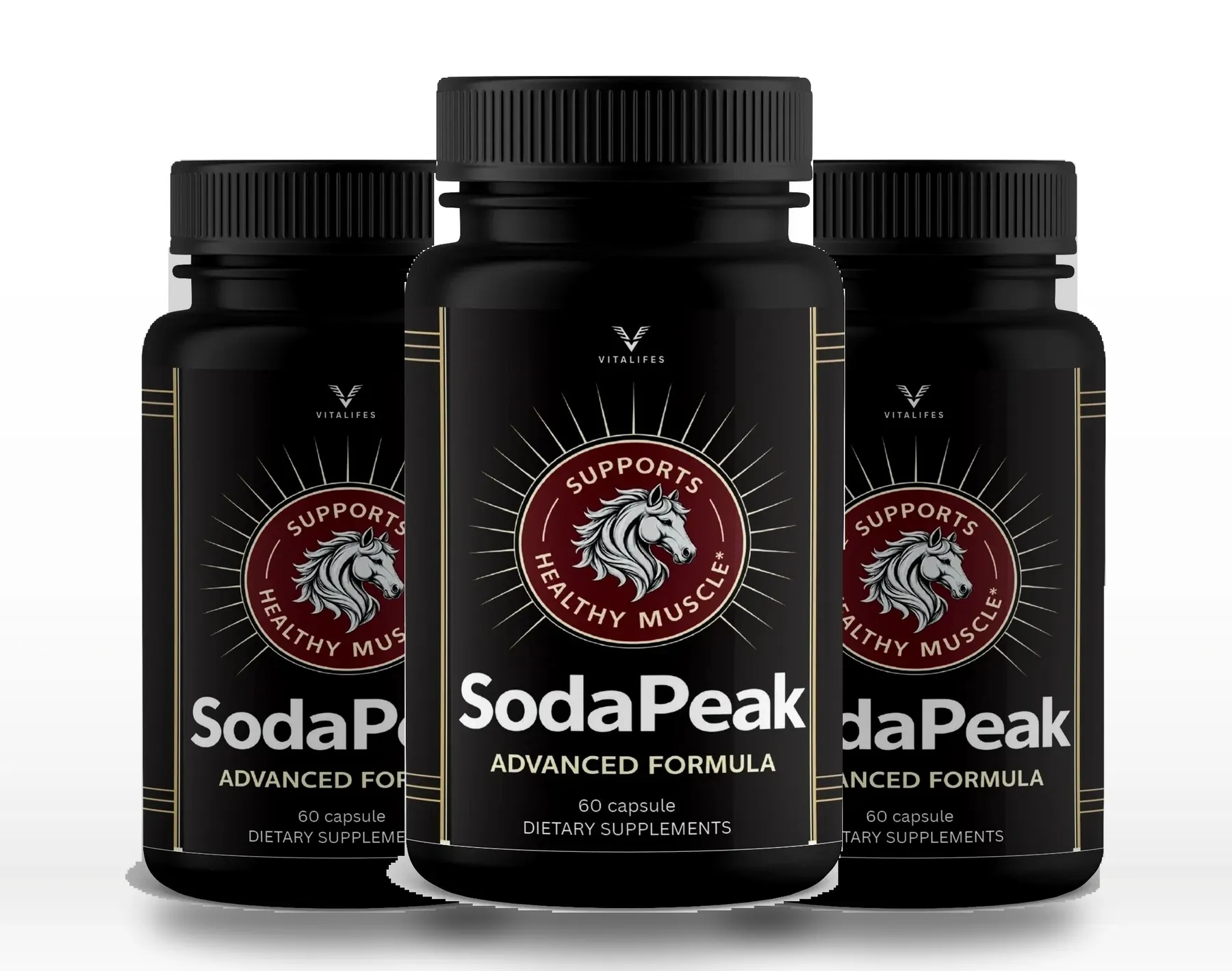
Ready to try SodaPeak?
Pick a pack and see the price at checkout. The money-back guarantee is as printed on the marketplace listing. Questions first? The order desk is listed in the footer.
Sold through a U.S. shop for SodaPeak. This site is not the manufacturer and earns when you buy.Keep reading
Tongkat ali and testosterone
Tongkat ali and testosterone: what the studies found, the doses they used, quality concern…
Read more →What is orchic substance?
Orchic substance explained: what it is, where it comes from, what glandular supplements cl…
Read more →SodaPeak ingredients
The eight parts of the 1200 mg blend.
Read more →